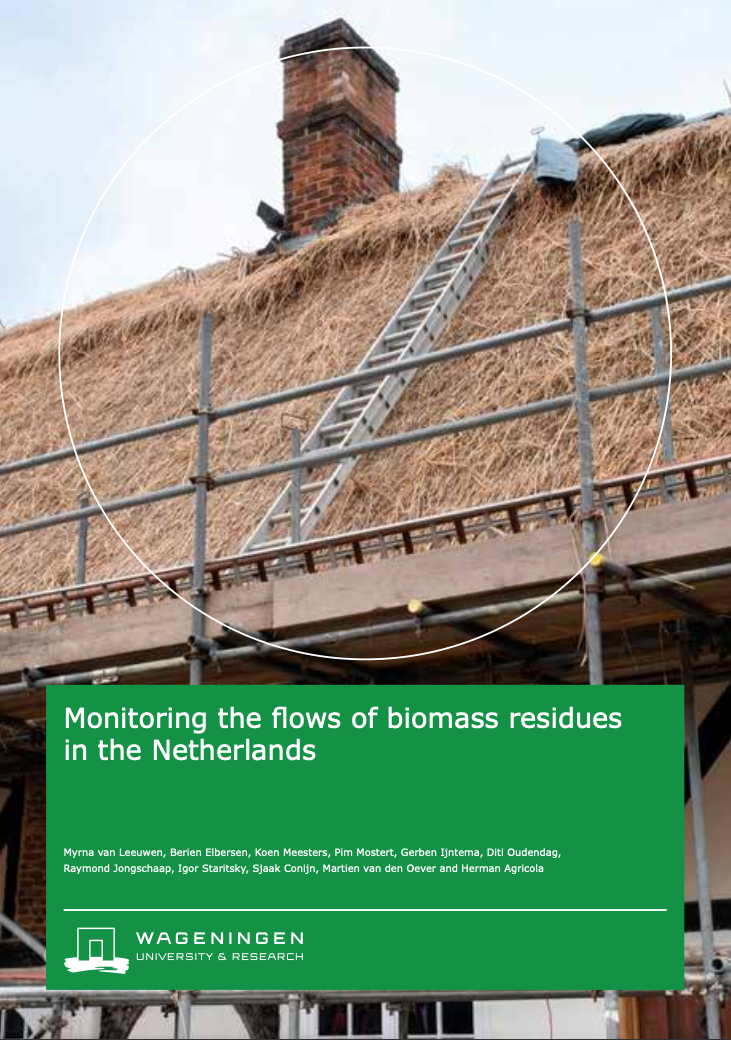
WUR: Monitoring the flows of biomass residues in the Netherlands | 2024
Introduction
"The increasing global demand for food, feed, biomaterials and bioenergy resources could lead to exacerbating pressures on natural resources and demand/supply conflicts. The International Bioeconomy Working Group (FAO, 2019) sees the application of circularity to a biomass value chain as the only way forward to make the bioeconomy sustainable. It follows the 9R approach which refers to (Ellen MacArthur Foundation, 2013):
- A useful application of materials (recover and recycle).
- An extended lifespan of products and their parts (repurpose, remanufacture, refurbish, repair, re-use).
- A smarter product use and manufacture (reduce, rethink, refuse).
A biomass value chain is considered to be sustainable if all components in the produced, collected, processed and consumed biological resources are reused, recycled and/or recovered and the waste is reduced to a minimum. These components can consist of materials, nutrients, water and energy. Increased circularity would help to mitigate the environmental impacts of increasing demand for biomass by easing the competition between different biomass applications, reducing greenhouse gas emissions associated with material use and correcting geographical imbalances in nutrient and carbon flows.
To get insight into which biological resources are supplied and used sustainably and which bring unwanted leakages to the environment it is essential to understand where and how biomass types flow through an economy and which features these types inherit. Statistics Netherlands (CBS) has developed a Material Flow Monitor (MFM) for the Netherlands that shows how different sorts of materials flow to, within and from the Dutch economy. PBL, CBS and RIVM use it as tool for monitoring the development towards the circular economy in the Netherlands (Potting et al., 2018). However, when it comes to monitoring the development of the circular bioeconomy, an MFM is less applicable because flows of biomass residues are hardly captured. The aim of our KB-1B study is to identify, quantify and store supply and use data for a wide range of biomass resources and associated residues, and to develop an approach to embed such additional information in the existing MFM of CBS. The resulting WUR version of the MFM can provide better insight into wanted or wanted leakages to the environment (soil, air, water) due to biomass resources, and identify potential new circular business cases that use biomass residues more efficiently and reduce waste to a minimum."
Recente artikelen
CE Delft: Eerst de koers, dan de groei - Opties om de nationale klimaatdoelen voor de luchtvaart wettelijk vast te leggen | 2026

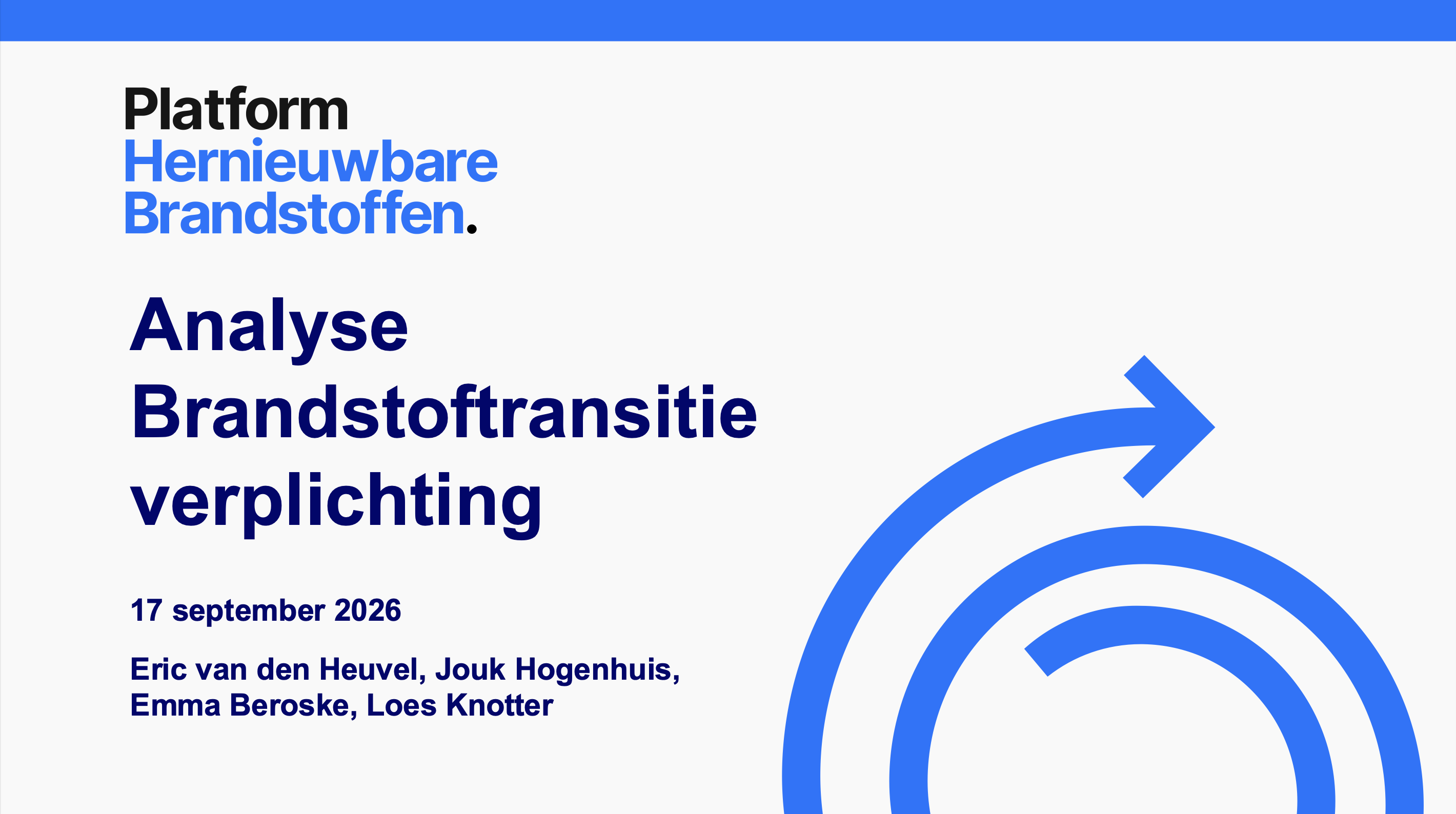
PHB: Analysis of the Dutch Fuel Transition Obligation - Market impacts and role of electricity in the ERE-system | 2026
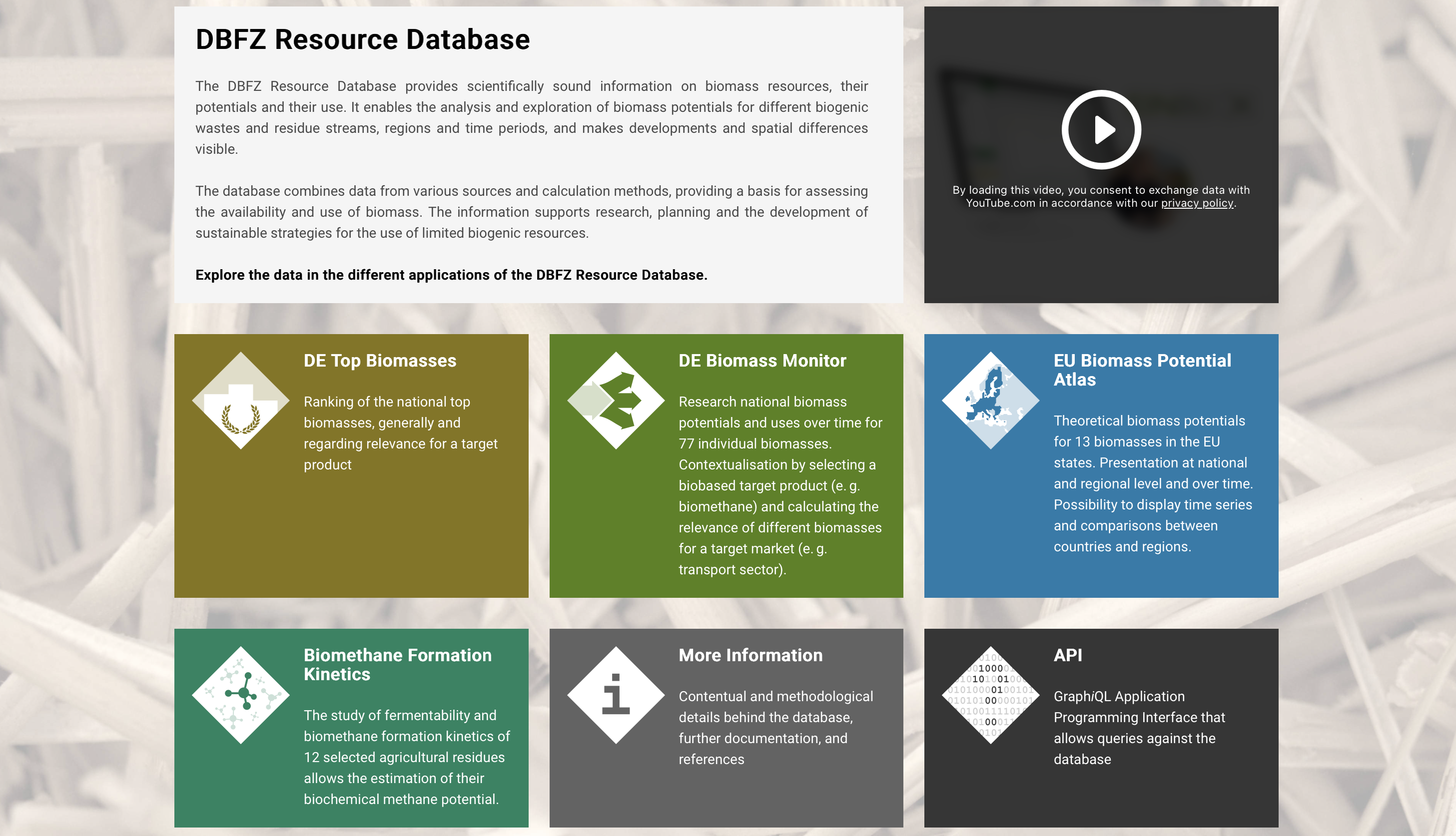
DBFZ Resources Database