PHB report: Digital transparency in POME-biofuel supply chains | 2026

Background
Platform Renewable Fuels was commissioned by RVO for a project on the use of digital transparency solutions applied to the specific case of palm oil mill effluent (POME) supply chains. This type of oil waste residue is an important feedstock in the Dutch market accounting for around 30% of renewable fuels in the Netherlands in 2024. This study investigated how to increase the transparency in this supply chain and support the certification system by linking it to the UN Transparency Protocol (UNTP) and Clean Fuel Protocol.
In this project, we investigate the case of palm oil mill effluent and aimed to answer the following questions:
- How can the use of encrypted data and verifiable credentials, the Digital Product Passport and Correlated Digital Traceability Events (DTE) (tools within the UNTP) improve transparency in the POME-oil based biofuel supply chain?
- What (additional) data points can we identify that support the verification of the residue oils?
- Can the use of the UNTP interoperability protocol and decentralised data architecture help to improve public oversight and private audit tasks?
- What does this mean for governance (organisational aspects) including the link with the Union Database for Biofuels (UDB)?
Takeaways
- The current certification system is based on administrative verification. A lot of information is already collected and verified during the annual audits of the palm oil mills, which are individually certified as point of origin of the POME supply chain.
- Information on individual batches is largely only transmitted between direct trade partners in a supply chain.
- The use of solutions like the digital product passport, correlated digital traceability events and business wallet can increase traceability and provide a better information position on the POME batches released from the palm oil mills for actors along the supply chain.
- Changing the way of recording (sustainability) information from the current paper trail to a digital form, making use of verifiable credentials will ensure that the data is secure, tamper-proof, and can be shared selectively. This is turn increases trust in the information and can be traced back to a legal entity.
- The implementation of DTEs for supply chain actions on facility and individual batch level could improve trust and substantially reduce transaction costs. This in turn could make public oversight and private audit tasks quicker, simpler and more effective.
- The possiblity of requiring additional data points in the form of a chemical to verify the composition of POME was explored to reflect the physical reality of individual POME batches. Although sensing technology to perform such test is affordable, such requirement would have to be further investigated for feasibility and cost effectiveness.
- The Union Database for Biofuels (UDB)centrally collects a large amount of information, but current access rights do not allow for systematic analysis of the data. Using the UNTP framework including DTE ensures that data is issued as verifiable credentials and offers the possiblity to link data sources and analyse datasets. Such analysis could be conducted to calculate a threshold reference for POME oil volumes and verify whether actual volumes are still possible within that threshold.
- The findings of this study should be further developed by setting up a research project with actors from palm oil residue producing countries and local governments.
Download
You can dowload the full report on the right hand side of by clicking here.
The slides presented during the concluding workshop of this project can be found here.
 Download hereVisit Website
Recente artikelen
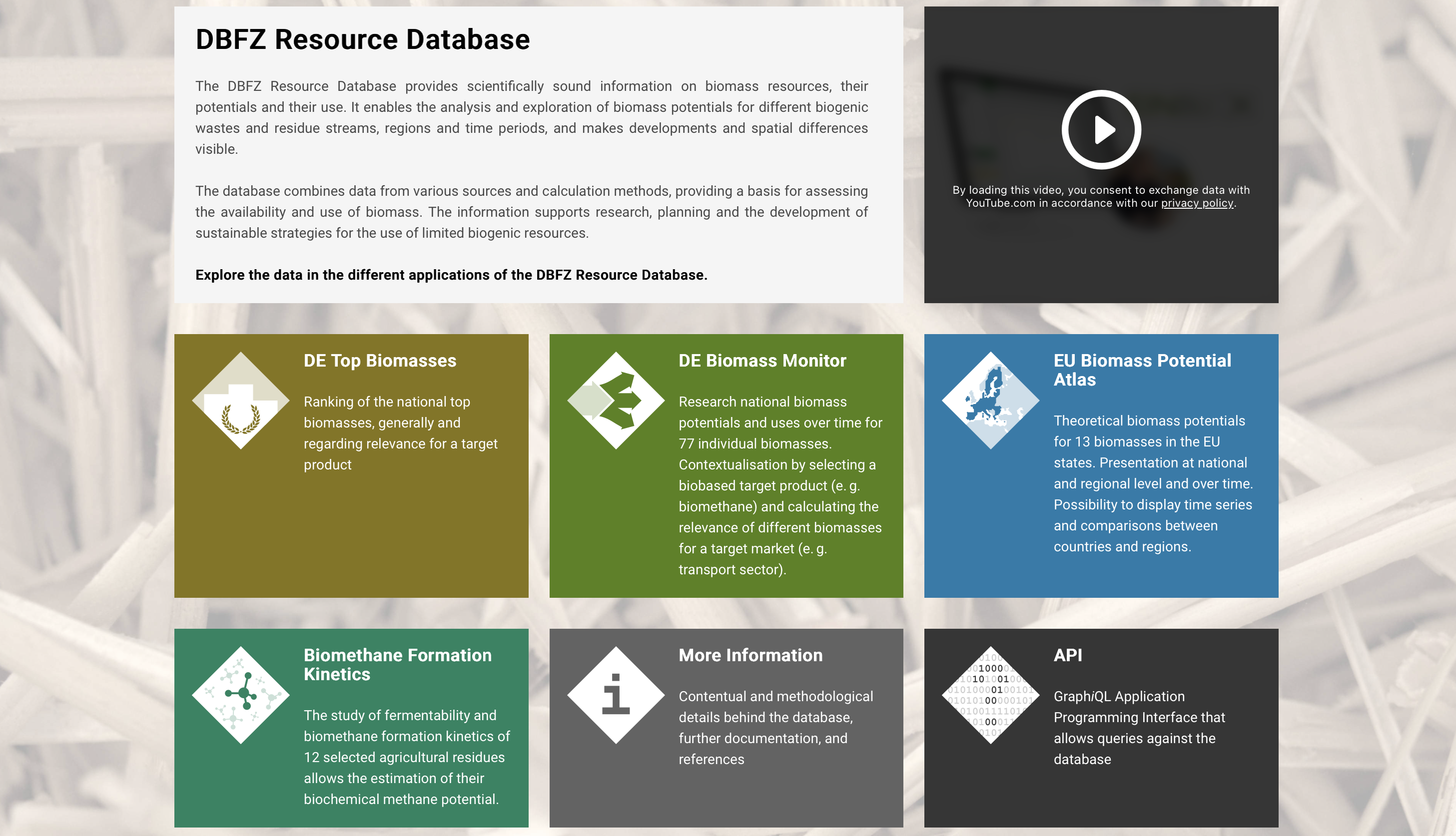
DBFZ Resources Database
Research project: Ab-Initio Biowaste Loop (ABEL) | 2026-2030

Australian Government: National Bioenergy Feedstock Strategy | 2026